Small Business Bookkeeping Basics: The Complete Beginner’s Guide
Bookkeeping basics for the owner who is the whole finance department: set up a chart of accounts, run one short weekly routine, reconcile every month, and keep the records the IRS expects, without hiring anyone or buying software on day one.

Bookkeeping is the habit that tells you whether your business actually made money this month. It is not a pile of receipts in a drawer, and it is not a panic in the week before your tax return is due.
This guide teaches small business bookkeeping basics the way a solo owner actually uses them. You will set up a simple system, run a short weekly routine, and close each month with numbers you can trust and act on.
The angle of this guide is deliberately narrow, and that narrowness is what makes it usable. It is written for the owner who is the whole finance department, working alone or with one helper, between serving customers.
Nothing here needs an accounting degree or expensive software on day one. A separate bank account, a short list of categories, and thirty steady minutes a week will carry a small business much further than most owners expect.
Work through the parts in order, because each one builds on the last. By the end, you will know what to record, when to record it, how to check it, and how long the law expects you to keep it.
Key Takeaway: Small business bookkeeping basics rest on four habits: record every transaction once, sort it into the right category, check your books against the bank every month, and keep the proof. A short weekly routine keeps those habits alive without hiring anyone.
What bookkeeping actually is, and what it is not

Bookkeeping is the daily recording of the money that moves through your business. Every sale, bill, fee and refund gets written down once, with its date, its amount, and the category it belongs to, so nothing depends on memory.
Accounting is the step that comes after the recording is done. An accountant reads your finished books, explains what the numbers mean, plans around taxes, and helps you decide what to do next with the profit you made.
That split is why bookkeeping vs accounting is not a contest between two jobs. Bookkeeping builds the raw record, and accounting turns that record into advice. A beginner needs the record first, because advice built on messy books misleads.
The IRS makes the same point in its own plain language. Good records help you watch the progress of your business, prepare your financial statements, track deductible expenses, and support every item you report on your tax return.
The five building blocks: your chart of accounts

Every transaction you record lands in a category, and the full list of those categories is called your chart of accounts. It is the skeleton of your books, and it decides whether your reports make sense at a glance.
The chart rests on five account types, and every category you create belongs to one of them. Assets are what the business owns, liabilities are what it owes, and equity is the owner’s stake left after debts.
The last two types track movement instead of holdings. Income records the money your sales bring in, and expenses record the money running the business takes out, from rent and stock to software fees and delivery costs.
Keep the list short enough to use without thinking. Most solo owners need one income category per way they sell, plus a handful of expense categories that match their real spending, not a page of accounts they never touch.
A clothing seller, for instance, might keep sales, stock purchases, packaging, market stall fees and card charges as separate categories. Each one answers a question the owner really asks, which is the test every category should pass.
Single-entry or double-entry: pick the system that balances

Single-entry bookkeeping records each transaction once, much like the lines in a checkbook register. Money comes in as a plus or goes out as a minus, and the running total is the whole story the system can tell.
Double-entry bookkeeping records every transaction twice, once in each of two accounts it touches. When a customer pays you, your bank account rises and your sales income rises with it, so the two sides always stay equal.
That balancing act is the system’s real gift to a beginner. If the two sides stop matching, something was recorded wrong, and the mismatch points you at the mistake while it is still small enough to find and fix.
Most bookkeeping software quietly uses double-entry behind a friendly screen, so you get the safety check without learning debit and credit rules. A spreadsheet can work at the very start, provided you record every transaction once and total carefully.
Featured Insight: Most owners do not fail at bookkeeping because the math is hard. They fail because the habit is missing, and a missing habit turns ten quiet minutes of recording into a lost weekend of guessing at tax time.
Cash or accrual: deciding when a sale counts

Your accounting method answers one question: at what moment does a sale or a bill enter your books? The two standard answers are the cash method and the accrual method, and the choice shapes every report you read.
Under the cash method, you record income when the money actually reaches your account and expenses when you actually pay them. Nothing exists in the books before the money moves, which keeps the record simple and close to your bank balance.
Under the accrual method, you record income when you earn it and expenses when you owe them, even if no money has moved yet. An invoice you sent counts today, and a supplier bill counts the day it arrives.
Most very small businesses may choose the cash method, and many solo owners do. Businesses that hold stock for sale usually need accrual accounting for their buying and selling, unless they qualify for the small business exception the IRS allows.
Whichever method you pick, use it the same way every month and tell your tax preparer which one you chose. Switching methods mid-year scrambles your reports, and a method change later is paperwork you can simply avoid today.
Setting up your books in one sitting

Setup starts away from the numbers, with a separate business bank account. The moment business money stops mixing with personal money, every statement becomes a clean record, and half of all bookkeeping confusion disappears before it can start.
Next, choose where the books will live: a simple spreadsheet or a bookkeeping app that connects to your bank. Either works at the start, provided it stores your chart of accounts and lets you attach receipts to entries.
Then load your five account types and trim the category list to your real business. Add your opening balances, meaning what the business owns and owes today, so the first report starts from truth instead of from zero.
Finish the sitting by writing two things into your calendar: a weekly slot for recording and the last day of each month for closing. Those two appointments are the system, and everything else in this guide supports them.
The weekly routine that keeps a solo owner current

The weekly routine is the heart of this whole system, and it fits inside one short sitting. Pick the same day and time each week, open your bank feed or statement, and work through the four steps below in order.
Step one is recording: enter every payment that arrived and every bill you paid since the last sitting. Work from the bank’s record rather than your memory, because the bank never forgets a fee or a small card payment.
Step two is sorting: give every new entry its category from your chart of accounts. Sorting while the week is fresh takes seconds per item, because you still remember what each payment was for and who sent it.
Step three is chasing paper: photograph every receipt from the week and attach it to its entry. A phone photo stored with the transaction beats a paper receipt in a glove box when a question arrives months later.
Step four is a two-minute look ahead: check which customer invoices are still unpaid and which bills fall due before the next sitting. That glance turns your books from a record of the past into a warning system.
Protect the sitting the way you protect opening hours, because customers and chores will always volunteer to fill it. Thirty unbroken minutes with the door shut beats two distracted hours, and the books can tell the difference.
Receipts and records: the proof behind every number

A number in your books is a claim, and a receipt is the evidence that backs the claim. The IRS calls this your burden of proof: the duty to show the documents behind the income and deductions you report.
Good proof is boring and complete: the seller’s name, the date, the amount, and what you bought. A card statement alone shows money moved, yet it rarely shows what the money bought, so keep the receipt beside it.
Store the proof where the entry lives, not in a separate pile you mean to sort later. Most apps attach a photo to a transaction in seconds, and one folder per month serves a spreadsheet just as well.
The IRS does not demand one special system from you, and that freedom helps a beginner. Its recordkeeping guidance says you may choose any system suited to your business, provided it clearly shows your income and your expenses.
Month end: reconcile the bank, then read three reports

Closing the month starts with reconciliation, the habit owners skip most and need most. To reconcile an account means matching every line in your books against the bank statement until both sides agree on the same ending balance.
Work through the statement line by line and tick off each match as you find it. Anything left over is a question to answer now: a missed fee, a duplicate entry, a payment recorded in the wrong month.
Once the accounts agree, read your profit and loss report, which lists income and expenses for the month and shows whether you made money. It is the report that turns your tidy categories into one honest answer.
Then glance at the balance sheet, which shows what the business owns, what it owes, and the stake left over at one fixed moment. Finish with the cash flow view, which explains why the bank balance moved this month.
Clean monthly numbers also feed the money habits around the books. They show the profit your tax set-aside should be based on, which our guide to how much a small business should set aside for taxes walks through in full.
The owners who trust their numbers are not the ones with the fanciest software, but the ones who sat down every week, recorded what happened while it was fresh, and never let a month close on a guess.
How long to keep your records: the IRS clock
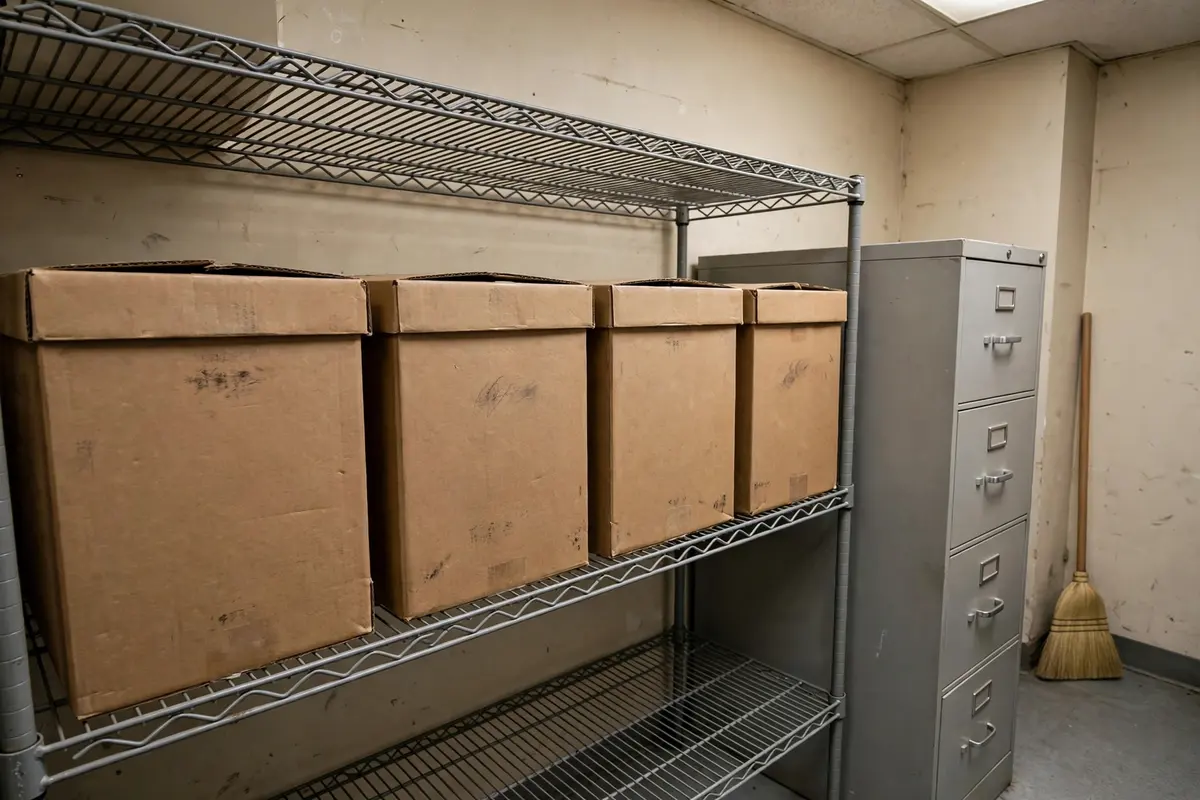
Records retention sounds dull until the day a lender, a buyer or the IRS asks you to prove an old number. The IRS rule is simple to state: keep each record until the time limit for changing that return runs out.
For most income tax returns, that clock runs for three years after you file. Keep the records behind the return for at least that long, and keep copies of the filed returns themselves, because later returns lean on them.
| Situation | How long to keep the records |
|---|---|
| Ordinary income tax return | 3 years |
| Claim for a bad debt or worthless securities loss | 7 years |
| Employment tax records | At least 4 years |
| Property records | Until the limit runs out for the year you sell or dispose of the property |
Some clocks run longer, and the table above covers the ones a small business meets most often. Claims for bad debt run seven years, employment tax records run at least four, and property records outlast the property itself.
The full detail sits in the IRS guidance on how long to keep records, and it is worth one read before your first big clear-out. When in doubt, keep the record, because storage is cheap and reconstruction is not.
Mistakes that quietly wreck a beginner’s books

The most common beginner mistake is mixing personal and business money in one account. Every mixed purchase forces a judgment call at sorting time, and judgment calls made months later, from memory, are where deductions quietly get lost.
The second mistake is letting the recording slide until the pile feels too big to face. Bookkeeping debt compounds like money debt: a week behind costs minutes, while a quarter behind costs days and a tax preparer’s patience.
The third mistake is building a chart of accounts with a category for every small thing. Forty expense categories slow every sorting session, and owners answer the slowdown by guessing, which quietly poisons the reports they rely on.
The fourth mistake is skipping reconciliation because the bank balance looks about right. About right is where duplicate charges, missed income and bank errors hide, and they stay hidden until they surface at the worst possible moment.
None of these mistakes needs talent to avoid, and that is the encouraging part. Each one is a habit problem with a habit answer: separate accounts, a weekly sitting, a short category list, and a monthly check against the bank.
This guide is general information for education, not financial, tax, or legal advice. Bookkeeping rules and record deadlines can change, and your situation may differ, so check the IRS website or a qualified professional before you act.
Questions owners ask about bookkeeping basics

Do I need software, or is a spreadsheet enough?
A spreadsheet is enough while your transactions stay few and simple, and many owners start there honestly. Move to an app when sorting eats your weekly sitting or when you need invoices, payroll or bank feeds handled automatically.
How much time should bookkeeping take each week?
For a solo owner with a modest flow of sales and bills, the weekly sitting in this guide takes about thirty minutes. Busy weeks stretch it, quiet weeks shrink it, and a skipped week doubles the next one.
Can I do my own bookkeeping, or should I hire a bookkeeper?
Most beginners can run the basics in this guide themselves, and doing so teaches you how money moves through your business. Hire a bookkeeper when the volume outgrows your weekly sitting or when payroll and sales tax enter the picture.
What records do I need if the IRS ever asks questions?
You need the documents that prove each line you reported: sales records, receipts and invoices for expenses, bank and card statements, and payroll records where they apply. The burden of proof sits with you, so the file matters as much as the figure.
When should I switch from the cash method to accrual?
Consider switching when you hold stock for sale, when customers pay long after you deliver, or when lenders ask for accrual reports. The switch changes your tax paperwork too, so make it at a year boundary with professional advice.
Do these basics change if my business is an LLC or a sole proprietorship?
The daily habits stay the same, because both structures record the same sales, bills and receipts in the same way. What changes is the tax form at the end and how owner pay is treated, which your preparer will flag.
Your first seven days with a clean set of books

You now hold the whole system: five building blocks, one balancing method, one timing choice, and two appointments that keep it alive. None of it asks for talent, and all of it rewards the owner who starts this week.
Day one is the bank account and the tool, chosen and opened before anything else happens. Days two and three are your chart of accounts, trimmed to your real spending and loaded with today’s opening balances.
The rest of the week is your first weekly sitting, run slowly and without rushing the sorting. Write the money habits you build here into your one-page business plan, so the system has a home beside your prices and goals.
One last link completes the loop between your books and your growth. Clean monthly numbers tell you what you can safely spend to win customers, which is the measurement habit our complete guide to marketing on a small budget builds its final step on.
James Walker writes about business, marketing and finance for USA, UK, Canada and Australia. Contact: contact@businessturnpoint.com