How to Start a Clothing Brand with No Money
No savings, no problem. This guide shows how to start a clothing brand with no money: plan and test for free, let print on demand or pre-orders carry the risk, open a shop that charges only when you sell, and cover the few small costs that remain in a safe order.
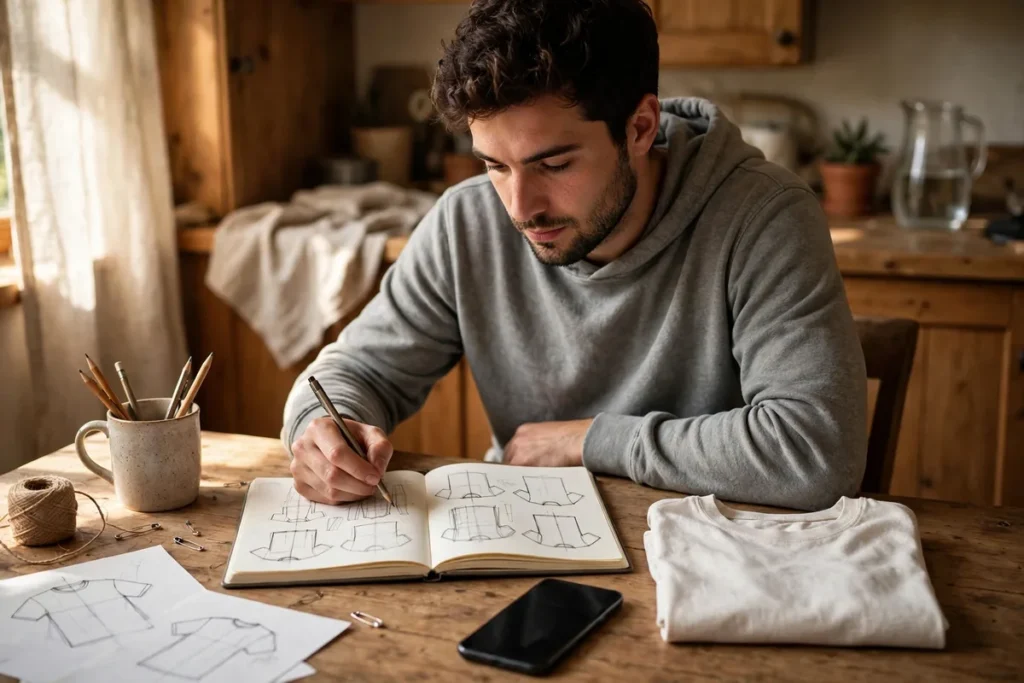
You can start a clothing brand with no money if you change what starting means. You will not buy stock, rent space, or pay for ads. You will plan, design, and test first, then let early sales pay for each next step.
This guide shows the order that makes a zero budget work. Each step costs nothing, or close to it, and each step proves something before you move on. By the end, you will know exactly what your first small spend should be.
It helps to know where this route sits in the bigger picture. Our complete guide on how to start a clothing brand walks through all nine steps of a normal launch. This page takes that same route and strips out every cost it can.
Key Takeaway: A zero budget works when sales fund the brand in stages. Plan and test for free, sell through print on demand or pre-orders, and spend your first dollars only on proof: one sample you have held, checked, and worn yourself.
What “no money” really means for a clothing brand
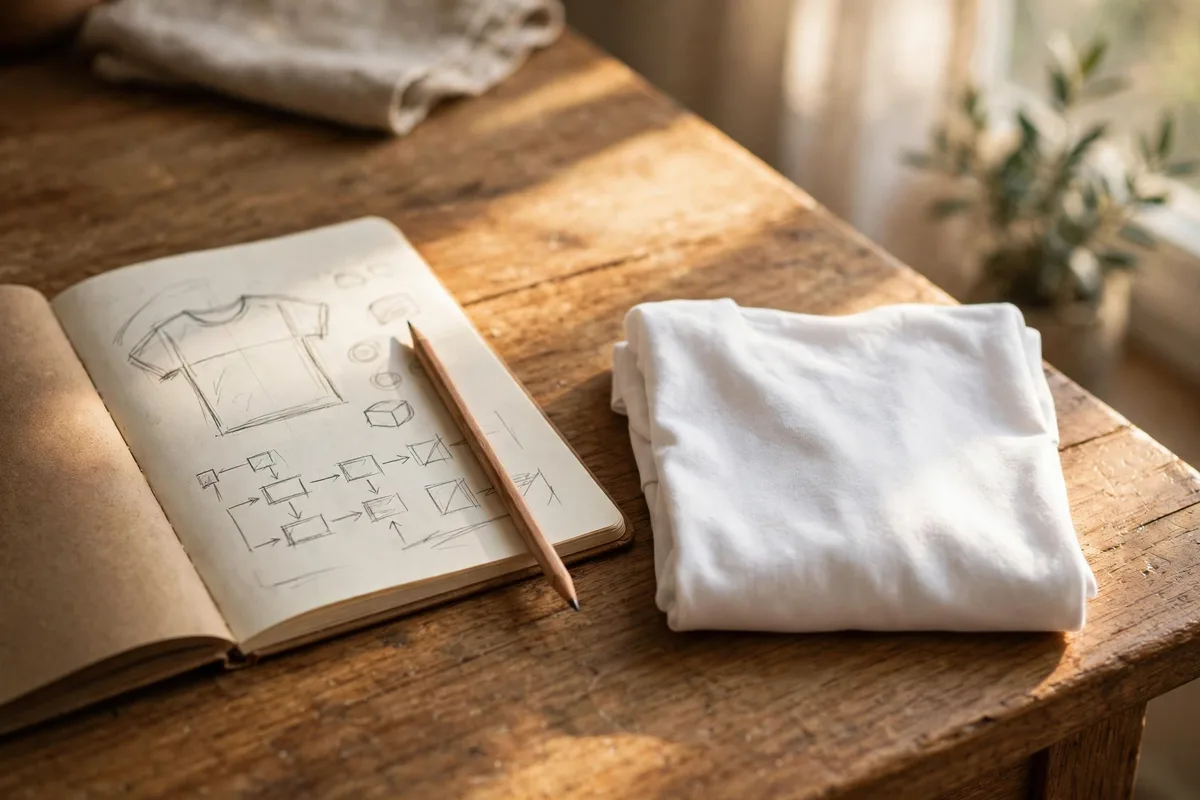
No money does not mean no costs forever. It means no costs before proof. Designing, researching your customer, and building an audience all cost time instead of cash. Money only enters the picture when a stranger is ready to buy something real.
That order matters more than the amount. Most failed brands spend first and learn later, and the learning arrives with boxes of unsold stock. A zero-budget start flips the order. You learn what people want while your savings stay safely in your pocket.
Be honest with yourself about one thing, though. Free tools and free platforms still take hours every week. Your real budget at this stage is time, and you will spend a lot of it. Founders who accept that trade usually outlast richer rivals.
Watch out for one trap in the free route. Many free tools push paid extras at the exact moment you feel stuck. A boosted post here and a premium template there can drain a small budget fast. Decide your free path, and walk past the offers.
Pick one product and one customer before you spend a cent
Start with one product, not a collection. One strong design on one good garment is enough to test an idea. A full range spreads your money, your sizes, and your attention so thin that nothing gets a fair chance to sell well.
Then name the one customer who will buy it. Write down who they are, what they do, and why this garment fits their life. A clear customer makes every later choice easier, from the design itself to the words on your product page.
You can do this whole step on paper, and it costs nothing but honesty. Sketch the design, or build it in a free design tool. Show the sketch to people who match your customer, and watch their faces before you hear their words.
Test the idea for free before you make a single garment
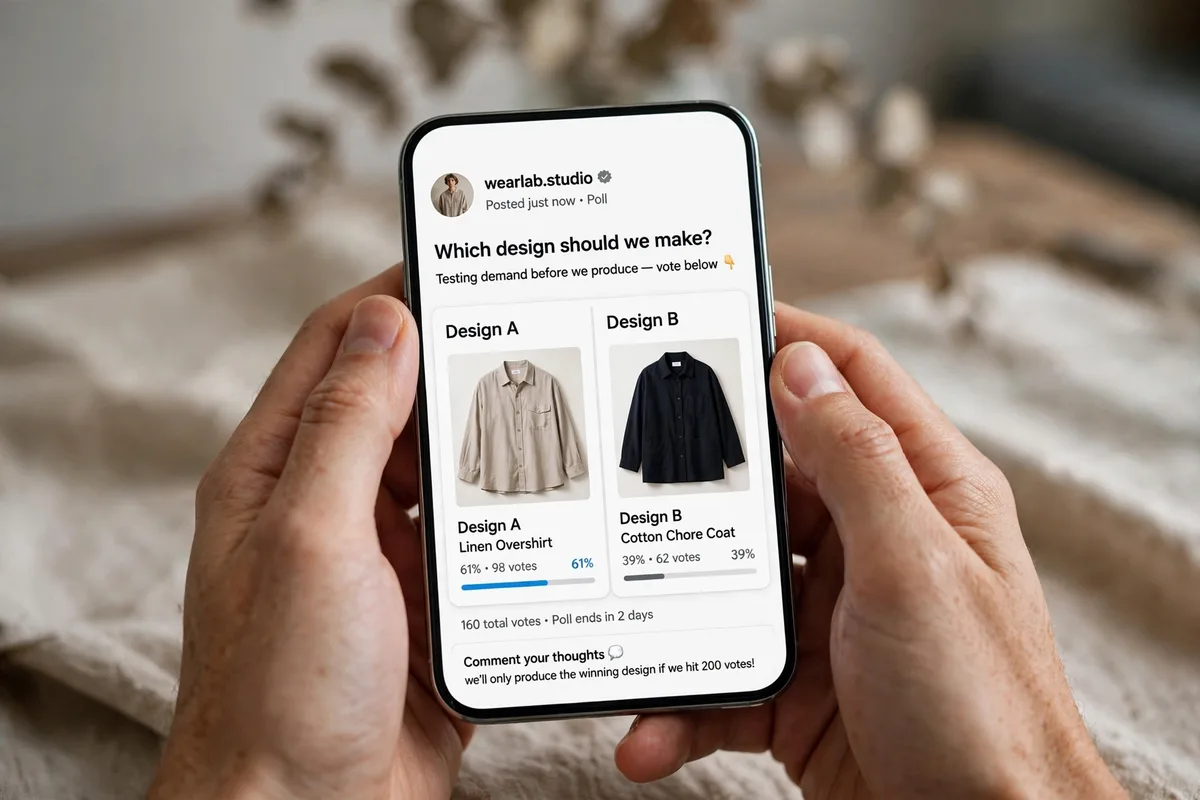
Polite friends will tell you your design is great, and that feedback is worth nothing. You need proof from strangers. Post the design where your customers spend time, and ask a question that forces a real choice between two clear options.
A simple poll works well at this stage. Show two designs, or two colors of one design, and ask which one people would buy this week. Votes are not sales, but a design nobody picks in a poll will struggle in a shop.
Featured Insight: The founders who start with nothing share one habit. They treat every free step as a test with a clear pass mark. Twenty waitlist emails, fifty poll votes, ten real comments: numbers like these decide what gets made, not hope.
Go one step further and open a waitlist. A free email form or a simple sign-up page tells you who wants the launch date. Even twenty sign-ups from strangers is real proof, and that list becomes your first audience on launch day.
Let print on demand carry the stock risk for you
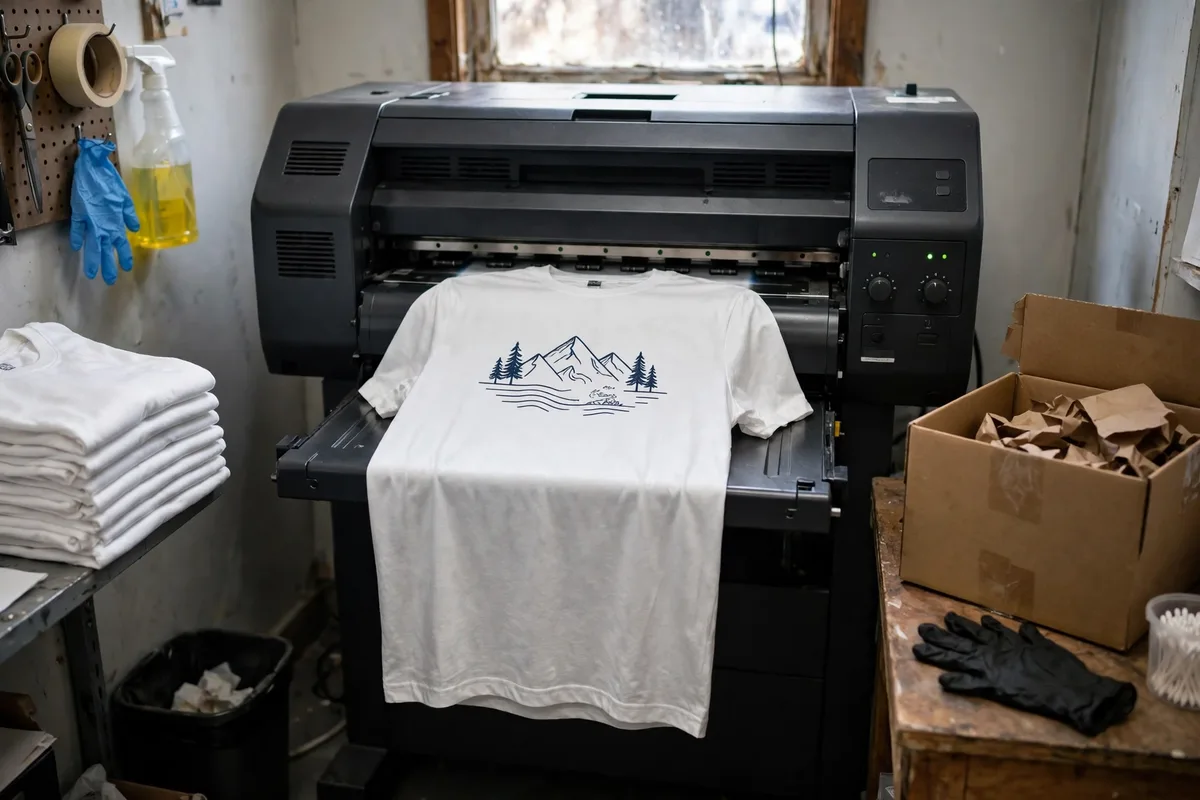
Print on demand is the engine of a zero-budget launch. A supplier holds the blank garments, prints your design when an order lands, and ships it to your buyer. You never buy stock, and you never guess how many of each size will sell.
The trade is margin. Each printed garment costs you more than a bulk order would, so each sale leaves you less profit. Accept that deal at the start. Thin profit on real sales beats thick margins on stock that sits in boxes unsold.
One catch catches new sellers out, so plan for it now. The supplier charges your payment method when the order is placed, while your shop may release the buyer’s money days later. Keep a small float aside so that gap never blocks an order.
Order one sample of your own product before you promote it. Wear it, wash it, and check the print with your own eyes. That single sample is the first money most zero-budget founders spend, and it protects every sale that comes after it.
Pick your supplier with care, because their quality becomes your reputation. Look for clear print areas, honest shipping times, and blanks that feel good in the hand. A supplier with printing near your buyers also cuts delivery times, and slow delivery kills young brands.
Or take pre-orders and let customers fund the first run
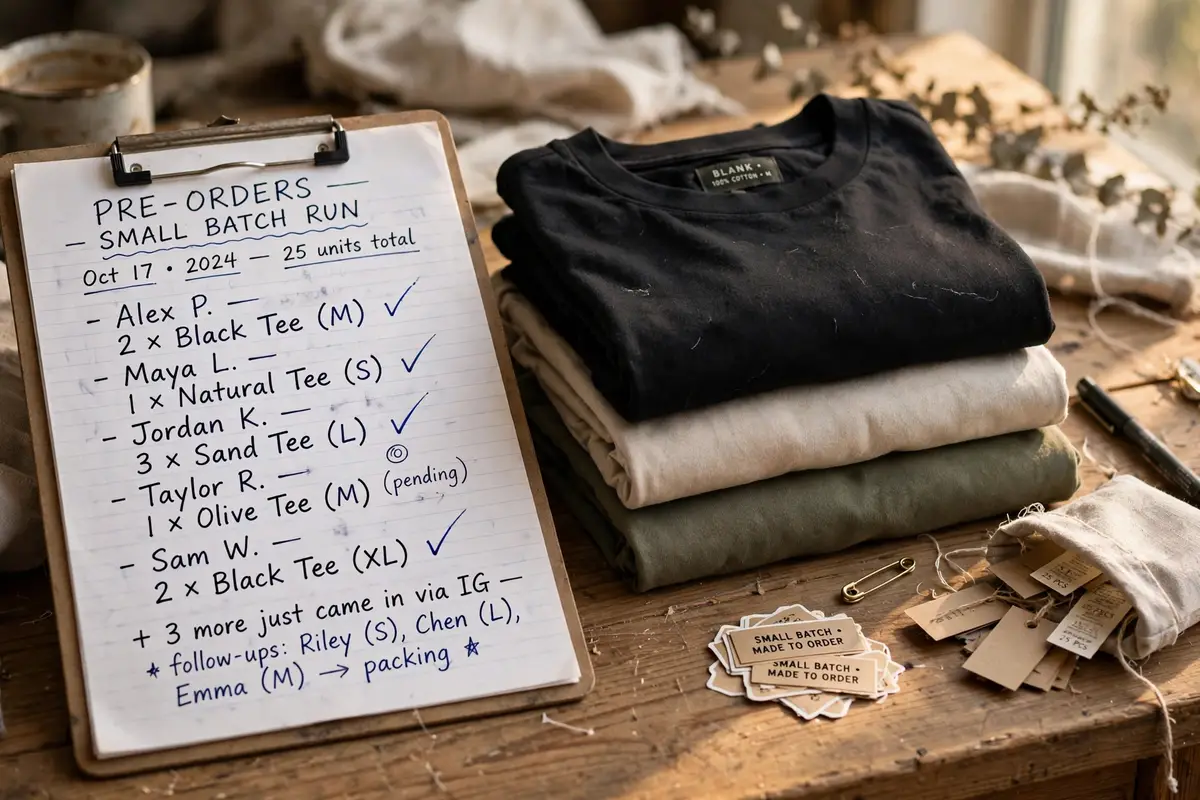
Pre-orders work the other way round. You show the design, take orders for a short window, and only then pay to produce the batch. Your customers fund the run, and you make close to the exact number of garments that people already bought.
This route suits one design with a clear story and a deadline. A two or three week window creates focus without dragging on. Set the ship date before you open, and put that date on the product page where every buyer can see it.
That ship date is not just good manners. In the US, the FTC’s Mail, Internet, or Telephone Order Merchandise Rule says you must ship within the time you state, or within 30 days if you state none. Read the FTC business guide to the rule before your first pre-order window opens.
If a delay happens, the same rule expects you to act fast. Tell buyers about the new date, and offer a full refund to anyone who does not want to wait. Handled early and honestly, a delay can build trust instead of breaking it.
Open a shop that charges you only when you sell
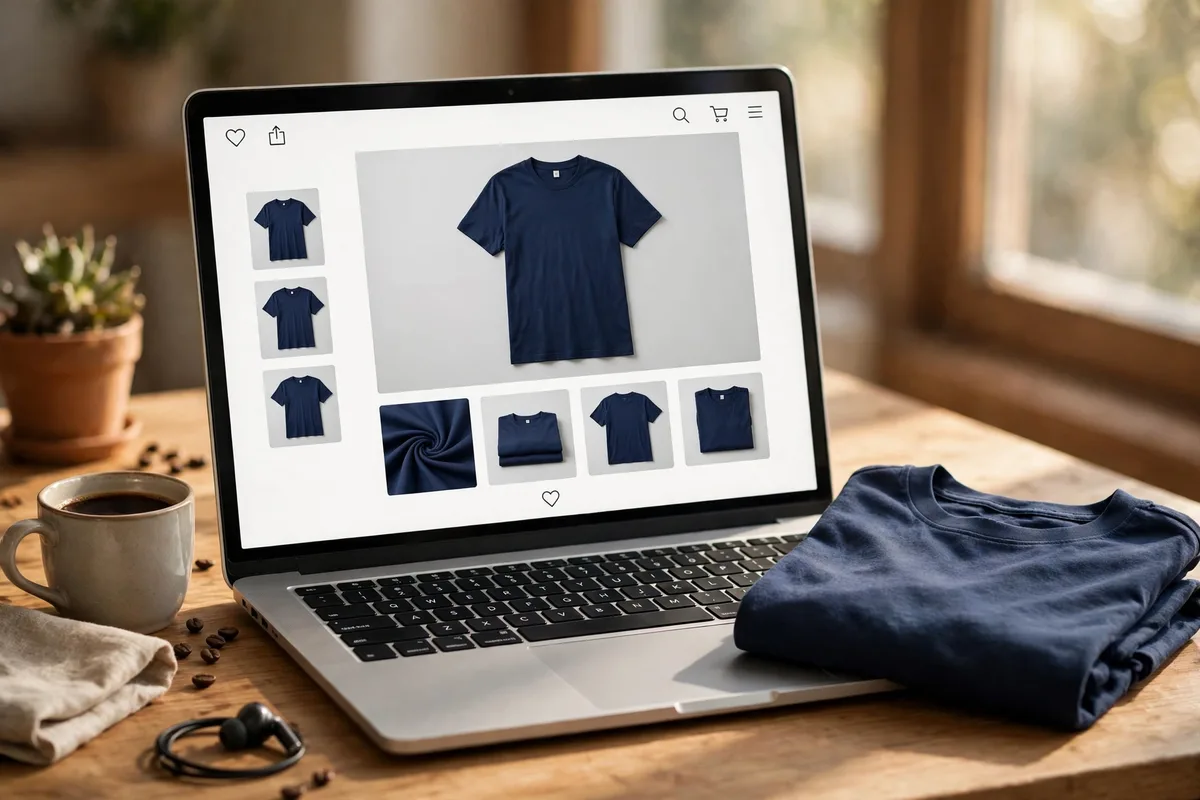
A marketplace is the cheapest shop you can open. On Etsy, a listing costs $0.20, and the main fees only fall due when an item sells. That shape suits a zero budget, because your costs follow your sales instead of running ahead of them.
Know the full fee picture before you set your price. Etsy also takes a transaction fee of 6.5 percent, plus payment processing of 3 percent and $0.25 for US sellers. Add those to your garment cost, or your profit will vanish quietly.
Your own store can wait. A platform like Shopify charges $39 a month for its Basic plan before you sell a single shirt. That bill makes sense once sales are steady. Until then, let a marketplace carry the fixed cost for you.
Your first customers do not care how much you spent to launch; they care that the shirt fits, the print lasts, and it arrives when you said it would.
Market the launch with time instead of money
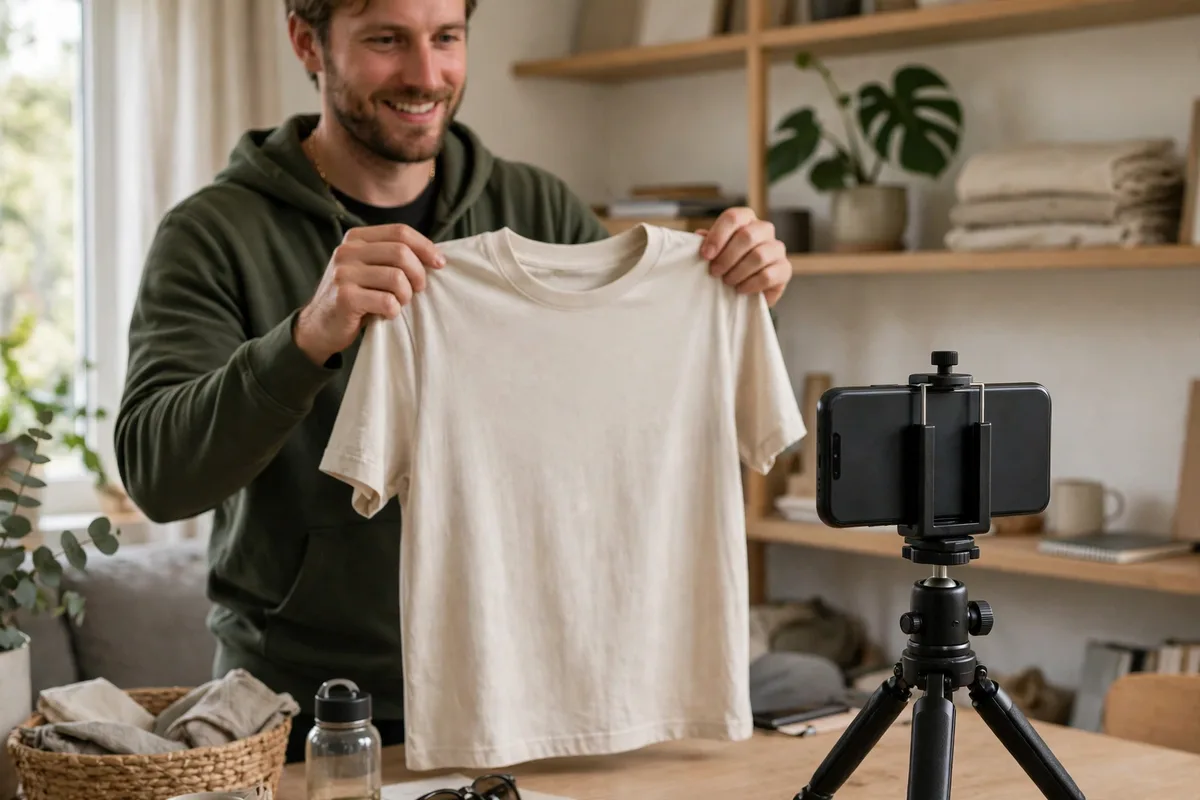
Free marketing is a trade: hours for reach. Post the making of your product, not just the finished piece. People follow a process they can watch, and short videos of printing, packing, and wearing your garment cost nothing but the time to film them.
Start where your customers already gather. That might be one social platform, a local group, or the comments under accounts they follow. Show up with useful posts and honest answers, and let your profile carry the link to your shop and waitlist.
When the launch gets close, work through a simple free plan instead of posting at random. Our guide on how to market a small business with no budget lists twelve free methods that pair well with this launch, from reviews to partnerships with nearby shops.
After the first orders land, ask each buyer for two free things: a review and a photo of the garment in real life. Both cost your customer a minute, and both sell harder than any post you write yourself. Permission first, always, before you share.
The small costs that remain, and honest ways to cover them
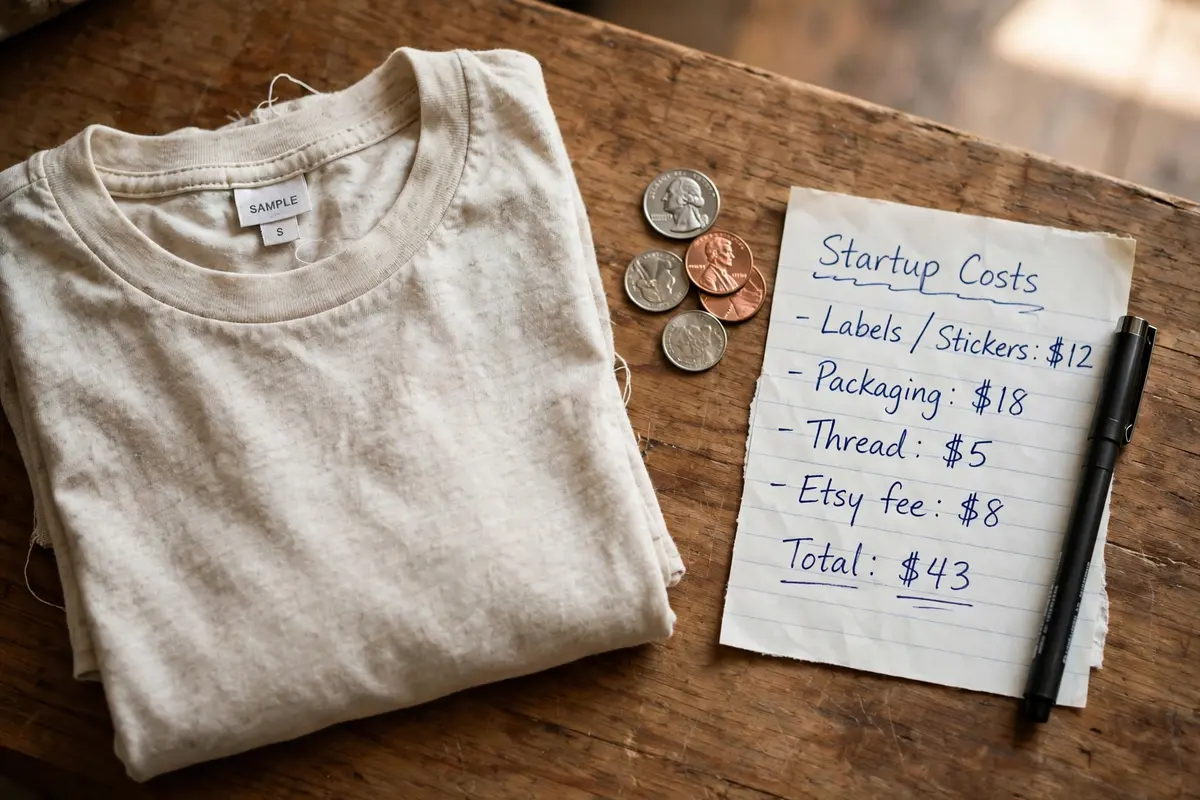
Zero budget does not stay zero forever, and pretending otherwise sets you up to fail. A sample, a small float for supplier charges, and basic packaging will ask for real dollars. The point is that each cost arrives after proof, not before it.
Cover those costs in the safest order you can. First sales are the cleanest source, and many founders reinvest every early dollar. A part-time income or a small side job is the next safest source, because it never asks for interest or repayment dates.
Borrowing sits last on that list, and small is the watchword if you use it. The SBA microloan program offers loans up to $50,000 through local nonprofit lenders, and the average loan is about $13,000. Read the SBA microloan page before you sign anything with anyone.
Success also brings one piece of paperwork forward. Once money starts moving, decide your business structure and keep brand money in its own account. Our comparison of LLC vs sole proprietorship for a clothing brand walks through that choice in plain words.
Your first seven days on a zero budget
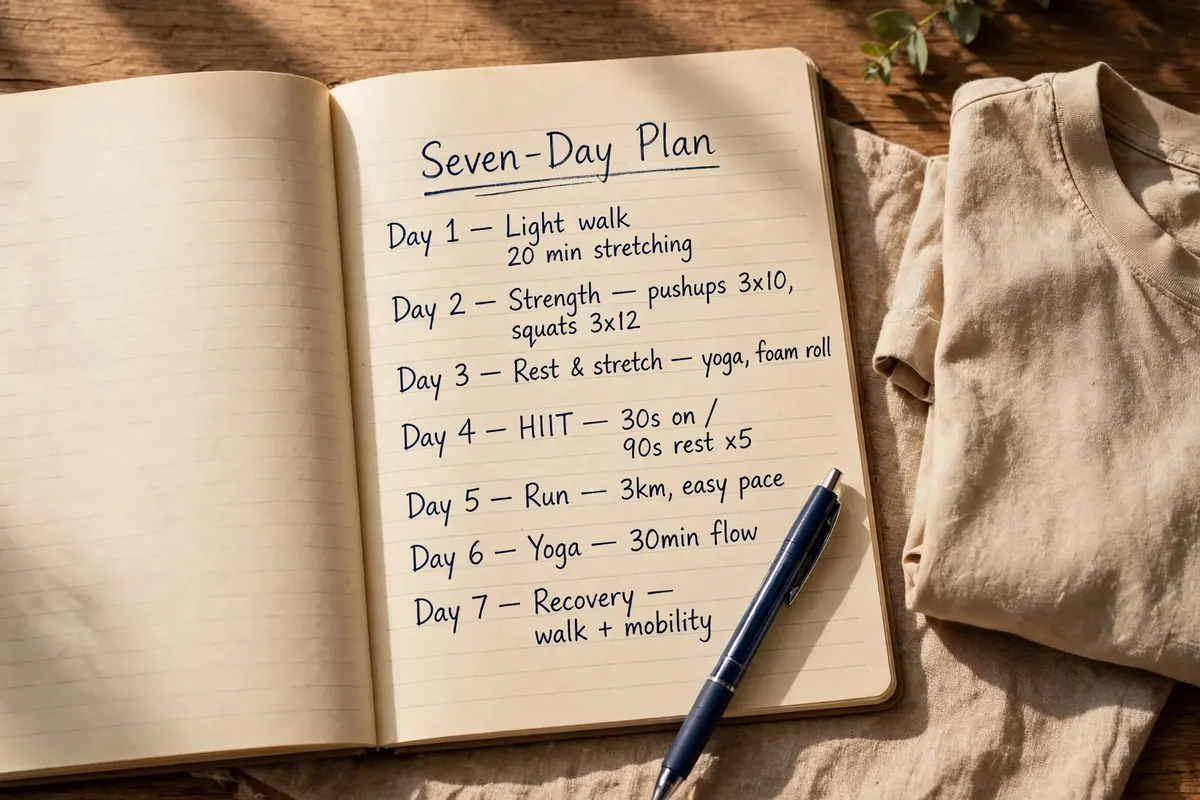
Day one and two belong to the product and the customer: one design, one buyer, written down in plain words. Days three and four go to testing, with a poll, a waitlist page, and honest questions in the places your customers gather.
Days five and six are for the shop: open the marketplace account, load the product page, and order your one sample. Day seven is for telling people. Share the launch date with your waitlist, and let the first orders teach you the rest.
Questions founders ask when the budget is zero

Can you really start a clothing brand with $0?
You can start the work for $0: the research, the design, the testing, and the audience building. Selling takes a small amount of working money, mainly one sample and a float for supplier charges. Print on demand keeps that amount as low as it gets.
Is print on demand the only way to start with no money?
No. Pre-orders are the other main route, and they suit brands that want their own labels and packaging. You can also start with thrifted blanks you print yourself, if you already own the gear. Each route trades money for control in a different place.
How do I get my first customers without ads?
Start with the audience you built while testing. Your waitlist, your poll voters, and the people who commented are your first buyers. Ask them to share the launch with one friend each, and offer early buyers a clear reason to order in week one.
Do I need an LLC or a business license to start?
Most founders begin as sole proprietors, because that is the default when you sell under your own name. Permits and licenses depend on your state and city, so check your state business site early. Many sellers register formally once the first sales land.
When should I switch from print on demand to buying stock?
Switch when one design sells steadily and the math asks for it. Steady sales mean your size guesses are safer, and bulk buying then lifts your margin on a proven product. Move one winning design first, and keep testing new ideas through print on demand.
Emily Carter writes about business, marketing and finance for USA, UK, Canada and Australia. Contact: contact@businessturnpoint.com