How to Start a Clothing Brand: A Step-by-Step Guide for Beginners
Starting a clothing brand takes more than a logo and a few designs. This guide walks through every step in order: the product, the name check, production options, honest pricing, the label rules most beginners miss, and a first launch that does not depend on a big budget.

A clothing brand looks simple from the outside. You design something, you print it on a shirt, you sell it.
The brands that fail usually fail in the boring parts nobody photographs. A name that was already trademarked, a price that leaves no profit after fees, or a first run of 300 hoodies in sizes nobody buys.
This guide takes the steps in the order they actually matter.
You will decide what to sell and who it is for, and you will check the name before you spend anything on it. You will choose how your products get made, and do the pricing math with real fees.
You will cover the legal and labeling basics, and you will launch in a way that tests demand before it drains your savings.
Key Takeaway: A clothing brand rarely fails on design. It fails on an unchecked name, a price that ignores fees, or stock bought before anyone proved they want it. Work through the nine steps in order, and you test demand before the spending gets serious.
The whole route, in nine steps

If you want the short version first, here it is.
- Pick one product and one clearly defined customer.
- Check that your brand name is free to use.
- Choose a production route: print on demand, wholesale blanks, or manufacturing your own garments.
- Price every product with all fees included, not just the garment cost.
- Set up the business properly, with a structure, an EIN (your business tax ID number) and the permits your state needs.
- Get your labels right, because federal rules cover what a garment label must say.
- Open your selling channel and load it with honest product pages.
- Order samples and test with real customers.
- Launch small, watch what sells, and reorder only what people already bought.
Each step gets its own section below. None of them needs a huge budget, but skipping one usually costs more than doing it.
Step 1: Decide what you will sell, and who it is for

Beginners usually start with a design. Start with a customer instead.
“Women aged 25 to 40 who run on weekends and want running gear that does not look like everyone else’s” is a customer you can design for, price for and advertise to. “People who like cool shirts” is not.
Pick one product to open with. One strong product, in a small range of sizes and two or three colors, teaches you more than a twelve-piece collection.
It keeps your stock costs low; it makes your marketing message simple; and it tells you quickly whether strangers will pay for your idea. You can add products once the first one earns its place.
Write this down before you move on: the product, the customer, and the reason that customer would pick yours over other brands. That one paragraph is the seed of your business plan, and it decides almost everything that follows.
Step 2: Check the name before you print it anywhere

A brand name is a business asset, and it can also be someone else’s property. Before you order labels, packaging or a logo, search the name properly.
Start with the US Patent and Trademark Office. Its free trademark search shows marks that are already registered or pending, and clothing sits in Class 25 of the trademark system. Search your exact name and close matches.
A similar name on similar goods is a problem, even if the spelling differs slightly. Then check the same name as a domain, on the social platforms you plan to use, and in your state’s business name records. A name that passes all four checks is worth building on.
If you decide to register the mark, the USPTO’s current base filing fee is $350 per class of goods. Extra fees can apply, based on how the application is written. Many founders file after their first sales prove the name is worth protecting, and that timing is fine.
Do not skip the search, because changing your brand name later costs far more than an afternoon of checking. By then you may have sold stock, built an audience and printed labels.
Step 3: Choose how your clothes get made
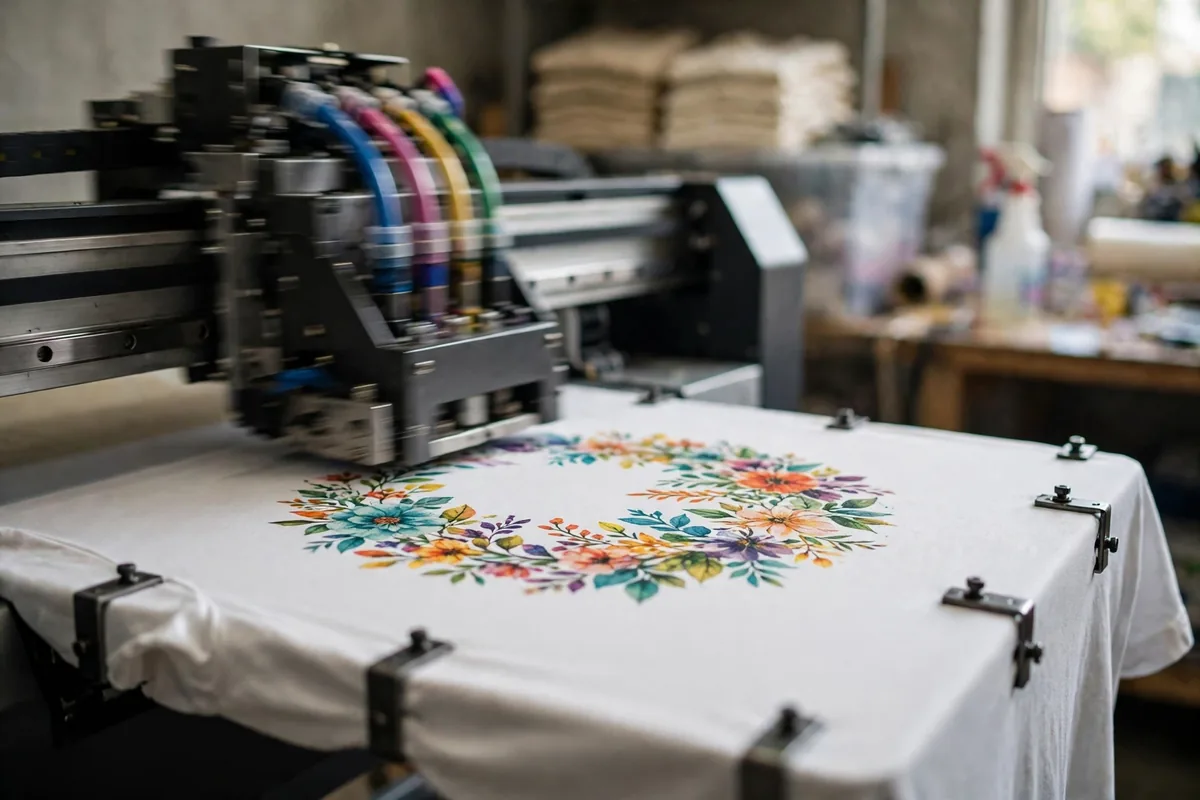
There are three real routes for a first brand, and each one trades money against control.
Print on demand
A service such as Printful or Printify holds the blank garments, prints your design when an order comes in, and ships it to your customer. You carry no stock and pay only when you sell.
The cost per item is the highest of the three routes, and you cannot touch the product before it ships. So your margin per sale is thin, and your quality checks are limited to the samples you order yourself.
Wholesale blanks with local printing
You buy plain garments from a wholesaler, then pay a local printer to add your designs, or print them yourself if you own the equipment. Costs per item drop, and you can check every piece.
The risk moves to your shelf: you pay for stock before you know what sells, and a wrong guess about sizes can lock up most of your budget.
Cut and sew manufacturing
A factory makes garments from your own patterns and designs. This gives you a product nobody else sells, and at volume it also gives the lowest cost per unit.
It also needs the most money up front, the longest waits before delivery, minimum order amounts, and the most know-how. For a first launch it is usually the wrong starting point, even if it looks good in year two.
| Route | Money up front | Cost per item | Stock risk | Control over quality |
|---|---|---|---|---|
| Print on demand | Lowest | Highest | None | Low |
| Wholesale blanks and printing | Medium | Medium | Medium | High |
| Cut and sew manufacturing | Highest | Lowest at volume | Highest | Highest |
Most beginners should start with print on demand or a small wholesale run, prove that people buy, and then put the profits into better production. The route is a business decision, not a badge of seriousness.
Featured Insight: The same $38 t-shirt loses about $3.40 to Etsy fees on one sale, while a Shopify store charges $39 a month before you sell anything. Marketplaces charge you per sale and your own store charges you per month, so the cheaper channel depends on how many you sell.
Step 4: Do the pricing math before you fall in love with a price
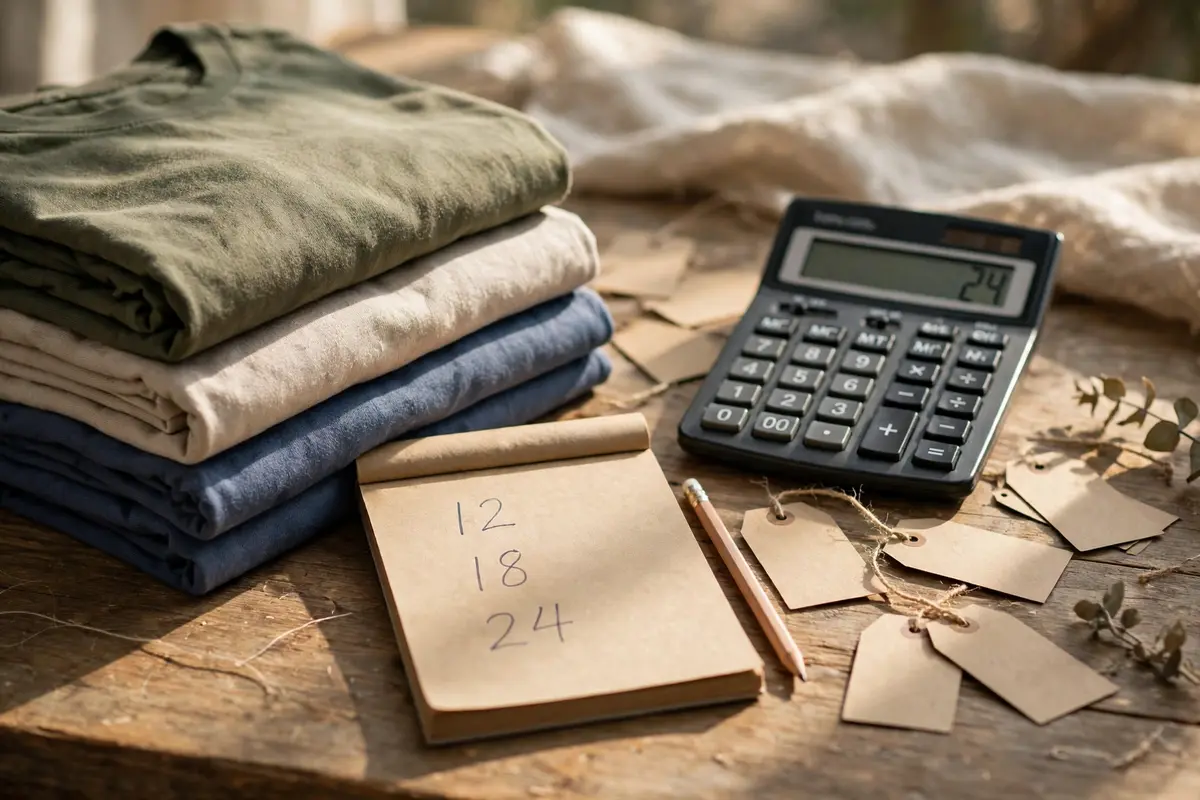
New brands often price by looking at competitors and picking a similar number. That is how a brand sells out and still loses money. Price from your costs upward.
Add up everything one sale costs you: the garment and printing, the platform and payment fees, packaging, shipping if you offer it free, and a fair allowance for returns. Then compare what is left against the price.
The leftover amount is your gross margin, and it has to cover your time, your marketing and your taxes before it counts as profit.
A worked example with real platform fees
Here is a simple example with made-up product costs and real platform fees. Say a printed tee sells for $38.
The print on demand company charges you $14 for the garment, printing and fulfillment. You sell on Etsy, where the official fee policy lists a $0.20 listing fee, a transaction fee of 6.5 percent of the price plus shipping, and payment processing of 3 percent plus $0.25 for US sellers.
On a $38 sale, with shipping charged on its own, those fees come to about $3.40. Add $1 for packaging and you are at about $18.40 in costs, leaving about $19.60 before your time, marketing and tax.
The same shirt sold on your own Shopify store avoids the marketplace fees. But Shopify’s Basic plan costs $39 a month at monthly billing, and card payments through Shopify Payments carry their own rate of 2.9 percent plus 30 cents. Neither channel is free; they just charge you in different places.
Run this math for every product, in every channel, before you set a price. If the margin cannot survive a return or a discount code, the price is wrong, however nice it looks.
Step 5: Set up the business properly

Three pieces of admin come before your first sale, and none of them is expensive.
Choose a business structure. Many founders start as a sole proprietor, because that is the default. Many move to an LLC as the brand grows, because an LLC keeps the business apart from your personal assets in a way a sole proprietorship does not.
The SBA’s guide to launching a business walks through the structure choices and the registration steps for each one. Your state’s rules decide the exact forms and fees, and filing fees for an LLC vary widely by state.
Get an EIN. An Employer Identification Number is the tax ID for your business. It is free from the IRS, and you apply on the IRS website; never pay a third-party site for one. You will need it for a business bank account and for most wholesale accounts.
Sales tax and a separate bank account
Sort out sales tax. When you sell clothing, most states expect you to collect sales tax on sales into that state, once you pass its thresholds. Many also require a seller’s permit before you start. Rules differ by state, so check your own state’s tax agency site rather than copying advice from a forum.
While you are there, open a separate business bank account. Keeping brand money apart from personal money makes your bookkeeping simpler and your tax set-aside possible, and that habit matters more than most tools you will buy.
Our guide on how much a small business should set aside for taxes shows how to work out the percentage. You use it once money starts coming in.
Step 6: Get your labels right
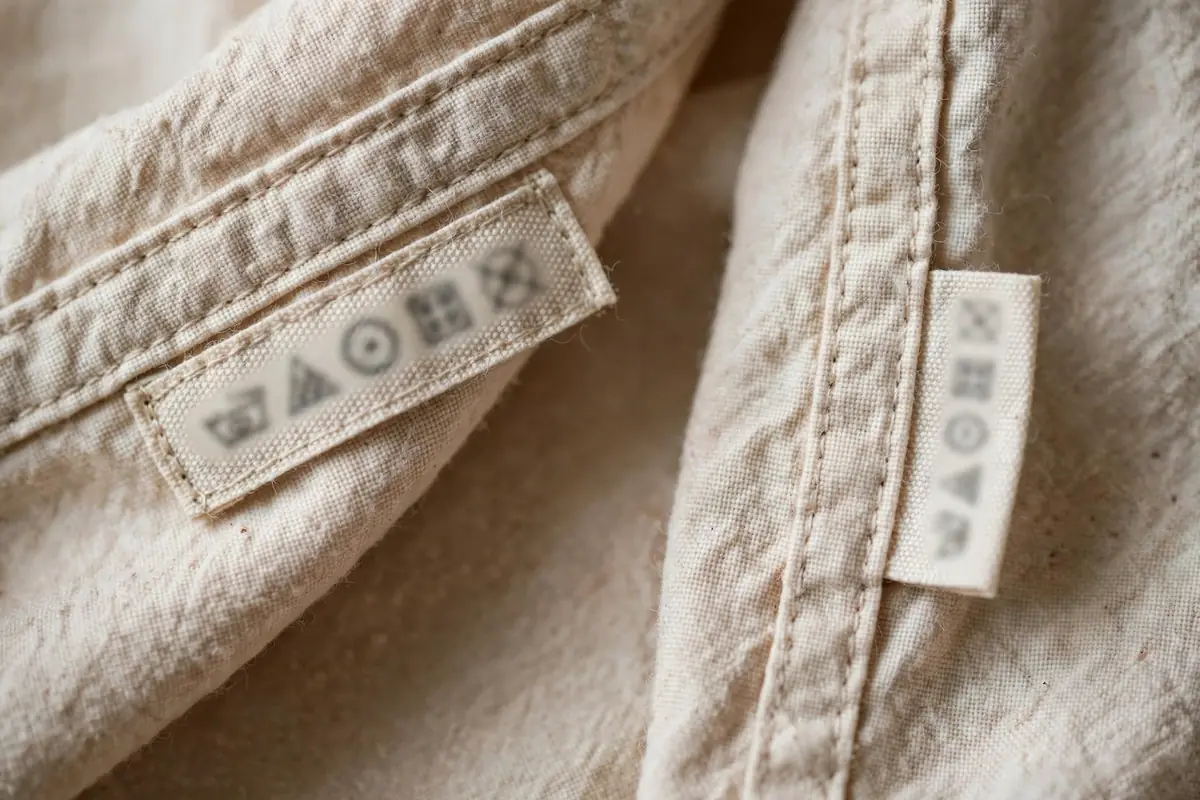
Clothing is one of the few products where the label is a legal document.
Under rules enforced by the Federal Trade Commission, most garments sold in the US must carry a label. The label must state the fiber content, by generic name and percentage, and the country where the garment was made or processed.
And it must name the manufacturer or another business responsible for it, or carry that business’s Registered Identification Number.
A separate FTC rule, the Care Labeling Rule, says each garment needs a permanent care label with instructions for cleaning the garment safely.
Before you approve a label design, read the FTC’s plain-language guide, Threading Your Way Through the Labeling Requirements Under the Textile and Wool Acts.
If you sell print on demand products, the provider applies its standard labels, but you are still responsible for what your listing says. Check that your product pages state fiber content and origin honestly, and never copy a big brand’s label wording and assume it covers you.
Launch with one product you have held in your own hands, and let strangers with wallets, not friends with compliments, decide what you make next.
Step 7: Set up where you will sell

Your first channel should match your production route and your patience.
A marketplace such as Etsy puts you in front of shoppers who are already searching. Its fees are published in its official Fees and Payments Policy.
The list includes a $0.20 listing fee for four months, a 6.5 percent transaction fee on the price plus shipping and gift wrap, and payment processing on top. Some new shops are also charged a one-time set-up fee when they open.
Your own store on a platform such as Shopify costs more in fixed monthly fees, starting at $39 a month for Basic at monthly billing. But you get your own domain, your own customer emails, and a brand that no marketplace can switch off.
Many brands start on a marketplace to test products, then open their own store once two or three products sell steadily.
Whichever you choose, write product pages like a salesperson who cannot be asked questions: exact materials, a size chart with real measurements, shipping times stated plainly, and photos of the garment on a person, not only flat mockups.
Step 8: Order samples and test like a customer
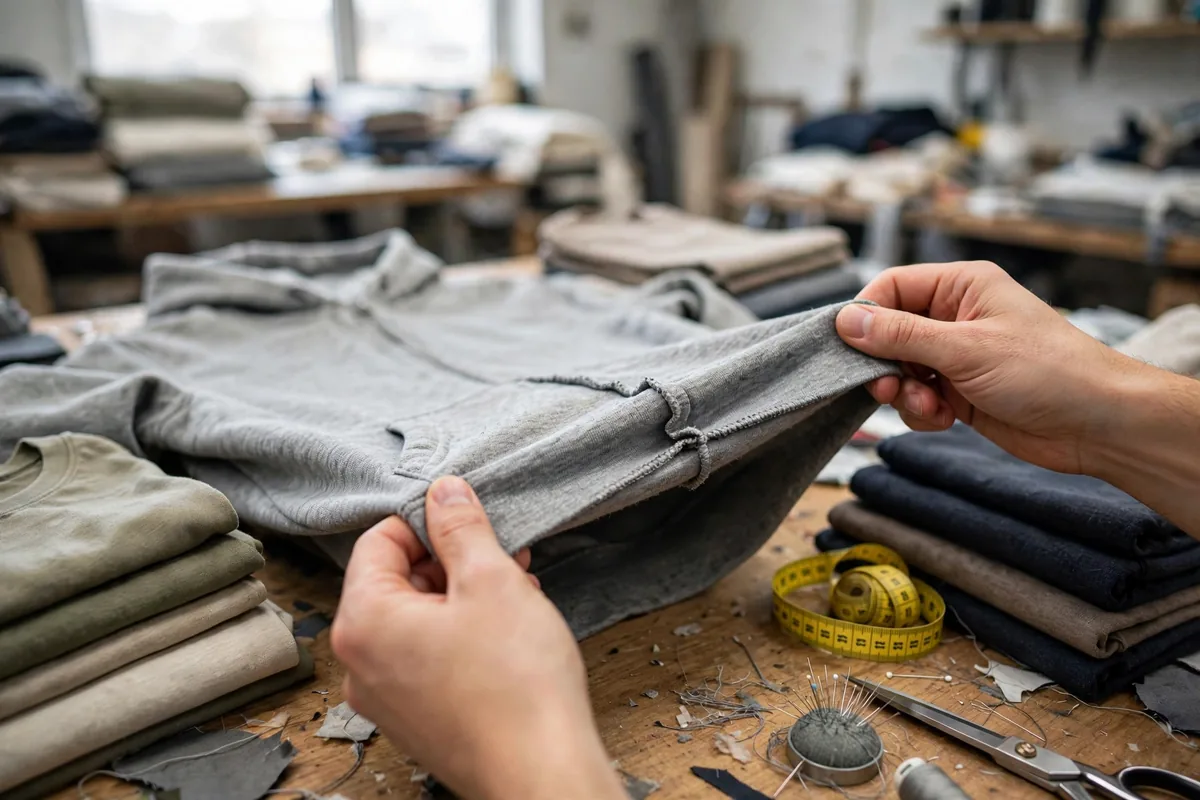
Never sell a garment you have not held. Order one of everything, in your own size if you can wear it. Wash it. Wear it for a day. Check the print after washing, the stitching at the seams, and whether the size chart told the truth.
Then test the purchase as a stranger would. Buy through your own store on your phone. Time how long delivery takes. Read your own confirmation emails.
Every rough edge you find in this pass is a refund or a one-star review you just avoided. Ask two or three people in your target customer group to do the same and tell them to be blunt rather than kind.
Step 9: Launch small, then let sales choose your next move

A launch is not a ribbon cutting. It is a test with a budget. Put your first product in front of your exact customer using the free channels first: your own social accounts, communities where you are a real member, and the email list you started building in step 7.
If you need a plan for that part, see our guide on how to market a small business with no budget. It lists twelve free methods that suit a new brand.
Give the launch a fixed window, such as thirty days, and decide up front what success looks like in numbers: orders, conversion rate, and which size or color sells first. When something sells, reorder or expand that product.
When something does not sell after a real chance, retire it without sentiment. Small brands win by making ten small, smart decisions, not one huge hopeful one.
Before launch day, it also helps to hold the whole business on one page: what you sell, who buys it, your prices, your costs and your first targets. Our guide on how to write a one-page business plan includes a filled example for a small clothing brand. You can copy it and adapt it.
Questions new clothing brand owners ask

Do I need fashion experience or a design degree to start a clothing brand?
No. You need one product a defined group of people wants, honest numbers, and the habit of testing before you scale. Design tools and print on demand services cover the technical side of production, and the business skills in this guide matter more than drawing skill.
How much money do I need to start?
It depends on the production route. Print on demand can start with little more than the cost of samples, a domain and your selling channel fees, because you pay for each garment only when it sells. A wholesale run or cut and sew production needs real money up front for stock.
The fees you can pin down exactly, such as the $350 per class USPTO filing fee and the Etsy and Shopify charges, are listed in the steps above. Anyone who quotes you one fixed startup number for every brand is guessing.
Should I register my trademark before I sell anything?
Search before you sell anything, and that part is a must. Registration can wait until the name has proven itself in the market, and many founders file in their first year. What you cannot undo easily is building on a name that a search would have flagged in an afternoon.
Do I need an LLC to start a clothing brand?
Not legally, in most cases. You can sell as a sole proprietor, and many people test their first products that way. An LLC becomes more attractive as sales, stock and risk grow, because it keeps the business apart from you personally.
Structure is a state-level decision, so check your state’s small business resources or ask a local accountant before you file.
How long before a new clothing brand makes money?
There is no fixed timeline. Anyone who promises one is selling something. The honest measure is not the calendar but the sequence: first a product strangers buy without you in the room, then repeat orders, then a margin that survives fees, returns and tax.
Brands that reach those stages in that order tend to last, whichever month it happens in.
Emily Carter writes about business, marketing and finance for USA, UK, Canada and Australia. Contact: contact@businessturnpoint.com